

Standard LED light sheets are made for dry indoor use. They can work outdoors or in wet areas only when the right sheet version sits inside a properly sealed, drained enclosure, with a waterproof driver outside it. The sheet itself is rarely the weak point; water getting into the cavity, condensation and the wiring usually are.
Most JJS light sheet models come in two versions: IP20 for dry interiors and IP54 with a protective coating for damp areas. Neither is meant to be exposed directly to rain or to sit in water.
What the IP rating means for a light sheet
The IP code (IEC 60529) has two digits: the first is protection against solids and dust, the second against water.
| Rating | Water protection | Where an LED light sheet with this rating fits |
|---|---|---|
| IP20 | None | Dry interiors: feature walls, reception desks, furniture, light boxes |
| IP54 | Splashing water from any direction | Damp interiors: bathroom vanities, shower walls behind sealed stone, bar fronts, kitchen splashbacks; covered outdoor areas inside an enclosure |
| IP65 / IP67 | Water jets / temporary immersion | The level the enclosure and the driver need for rain-exposed outdoor work |
Where light sheets work, and what each location needs
- Dry indoor (walls, counters, displays): IP20 sheets, standard drivers.
- Damp indoor (bathrooms, bars, kitchens): IP54 sheets, a sealed face (stone or acrylic bonded and siliconed at the edges), and the driver in a dry, ventilated spot.
- Covered outdoor (canopies, entrances, covered terraces): IP54 sheets inside a closed cavity, with an IP67 driver and outdoor-rated cable.
- Fully exposed outdoor (facades, pool surrounds, freestanding signs): the enclosure must be rated IP65 or better, with drainage and venting. Treat it as an engineered fixture, not a wall finish.
- Underwater or standing water: not suitable for LED light sheets.
Five things that decide whether an outdoor project lasts
- Seal the face, not just the sheet. The joint between the stone or acrylic and its frame is where water gets in. Use a continuous gasket or sealant and avoid open joints on the top edge.
- Plan for condensation. Warm days and cold nights pull moist air into a cavity. A small drain or breather vent at the lowest point lets moisture out; a fully airtight box with no vent often fogs up.
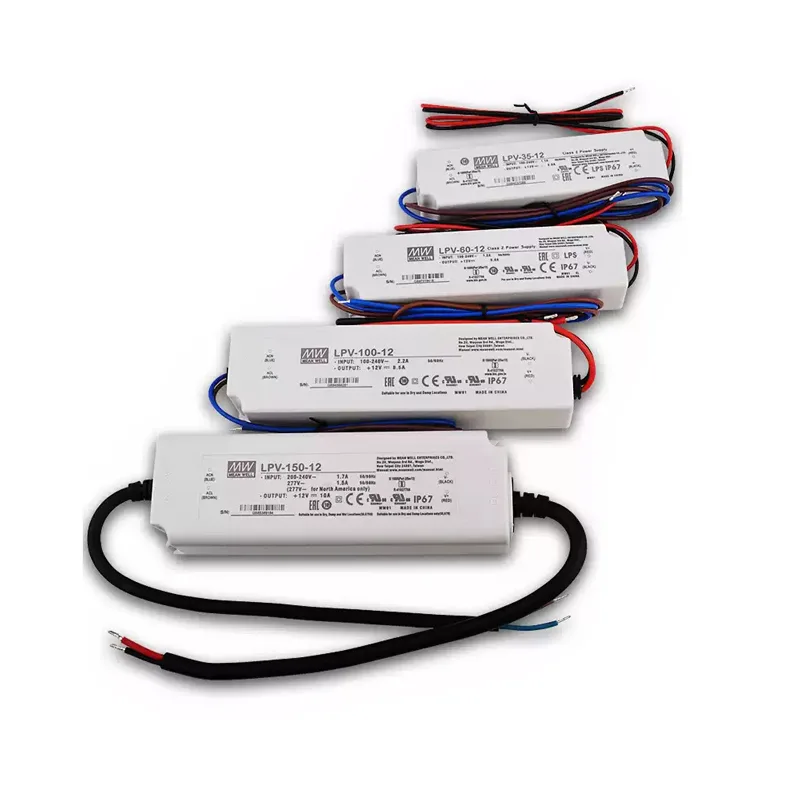
- Keep the driver outside the cavity. Use an IP67 constant-voltage driver such as the Mean Well HLG, ELG or LPV series, mounted where it is sheltered and can be reached for service.
- Bring cables in from below. Use cable glands, a drip loop, and waterproof connectors. Water follows the cable, so an entry from the top lets it run straight into the cavity.
- Allow for heat and sunlight. A sealed box in direct sun gets hot. Leave air space behind the backing panel, keep the brightness to what is needed, and use UV-stable acrylic or resin faces, since some plastics yellow in sunlight.
Electrical safety
LED light sheets run on 12V or 24V DC, which lowers the shock risk inside the panel, but the mains side of the driver is not low voltage. Outdoor and wet-location wiring should be done by a qualified electrician and follow local rules, such as wet-location requirements and residual current (GFCI/RCD) protection where required.
What to send for an outdoor or wet-area quote
Along with the usual size, material and control details from the LED light sheet RFQ checklist, tell us:
- Exactly where it goes: indoor damp, covered outdoor, or fully exposed
- How the face will be sealed and whether the enclosure has drainage
- Where the driver can be mounted and how long the cable run is
- Typical temperature range and direct sun exposure
FAQ
Are LED light sheets waterproof?
Not fully. Standard sheets are IP20 (no water protection). Most models also come in an IP54 version that resists splashing, but no light sheet should be exposed to rain or immersed without a sealed enclosure.
Can I use LED light sheets behind stone in a shower?
Yes, with IP54 sheets, a fully sealed stone face and the driver outside the wet zone. Have an electrician confirm the zone rules in your country.
Can light sheets be used on a building facade?
Only inside an engineered enclosure rated IP65 or better, with drainage, venting and IP67 drivers. Send drawings so the layout and sealing can be reviewed.
Which driver should I use outdoors?
An IP67 constant-voltage driver in 12V or 24V, sized with about 20% spare capacity. See LED power supplies for options.
Related: what is an LED light sheet · how far the sheet can be from the power supply · how to cut and install LED light sheets