
Project Images and Wiring References
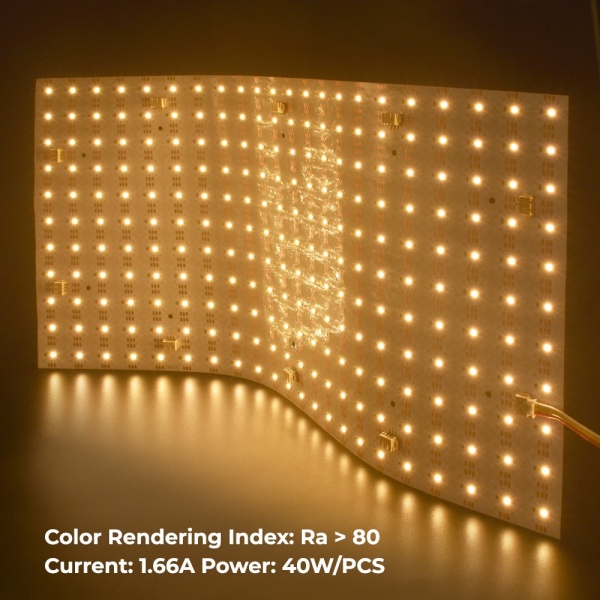
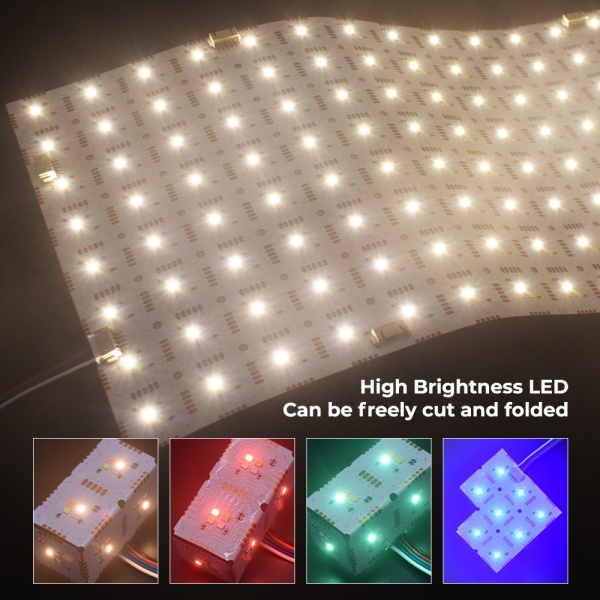
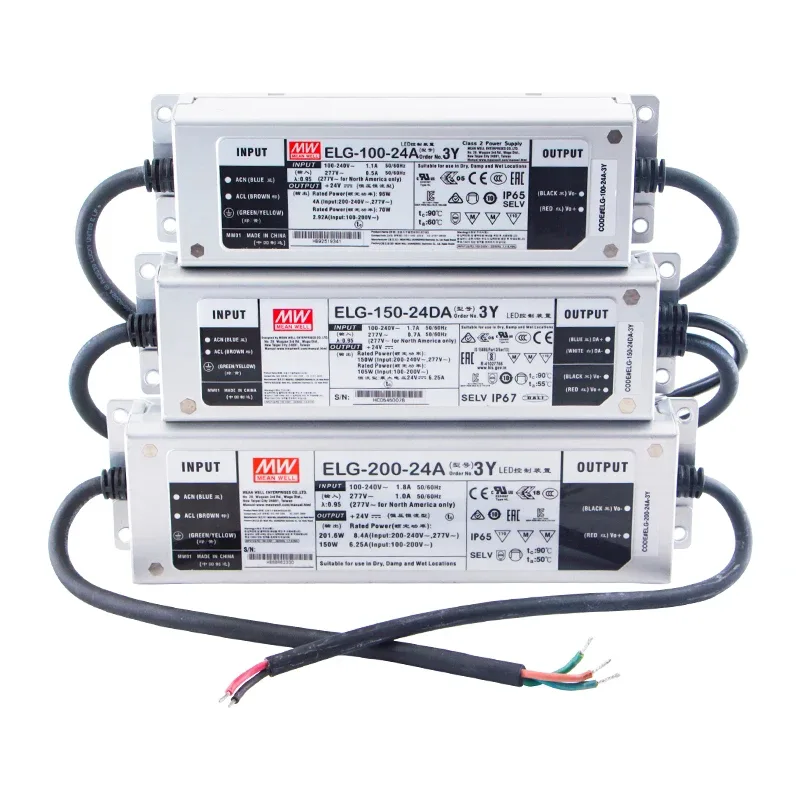
There is no single maximum distance from power supply to LED light sheet that works for every project. The safe distance depends on system voltage, total wattage, current, cable gauge, cable length, connector rating, sheet layout, and acceptable voltage drop.
The risk is simple: if the run is too long or too much current passes through a small cable path, the sheets near the power supply stay bright while the far end becomes dimmer or color-shifted. This is especially noticeable in long bar counters, large stone walls, RGBW projects, and CCT dimming systems.
Why Daisy-Chaining Can Cause Dimming
Daisy-chaining is convenient for short, low-load runs. But when many sheets are connected end-to-end, each connection carries current for the downstream sheets. The farther the power travels, the more voltage can drop across wires, copper traces, connectors, and terminals.
| Symptom | Likely cause | Better approach |
|---|---|---|
| Far end is dim | Voltage drop from long cable or long chain | Add center feed, dual-end feed, or split zones |
| RGB color shifts | Unequal voltage across color channels | Shorten runs and zone by controller capacity |
| Connector heats up | Current exceeds connector or wire comfort range | Reduce load per run and improve wiring |
| One area flickers | Weak connection or overloaded dimmer/controller | Check terminals, controller load, and PSU margin |
Use Parallel Zones Instead of One Long Chain
For large projects, the safer design is usually parallel power distribution. Each zone receives power from a nearby supply or distribution point. This keeps cable length and current under control, and it makes maintenance easier if one area needs troubleshooting later.
The article how to reduce voltage drop in large LED light sheet installations covers this issue in more detail. You should also coordinate the design with LED power supplies and the power supply and controller planning guide.
What to Confirm Before Installation
- Voltage of the selected sheet model
- Total wattage per zone
- Distance from power supply to first sheet
- Distance between sheets
- Wire gauge and connector rating
- Whether power is fed from one end, center, or both ends
- Controller maximum current per channel
- Service access after stone, acrylic, or cabinetry is closed
Rule of Thumb
If the project is small, dry, low load, and close to the supply, short daisy chains may be acceptable. If the project is long, high load, color-changing, or permanently built into stone or millwork, design it as multiple zones from the start.
When in doubt, send the drawing through the LED light sheet quote request page. Cable exits, power location, and service access should be reviewed before materials are cut.
How to Judge Cable Distance in Real Projects
Cable distance should be judged by current, not only by physical length. A five-meter run carrying a very small load may be acceptable, while a shorter run carrying a high load may still create voltage drop. The more current the cable carries, the more important wire gauge, connector quality, and power injection position become.
For long stone walls or counters, avoid thinking of the layout as one line of sheets connected from left to right. Think of it as several maintainable lighting zones. Each zone should have a manageable load, a known cable route, a practical feed point, and access to the driver or terminal area. This is especially important when sheets will be hidden behind expensive stone, acrylic, or built-in cabinetry.
When Daisy-Chaining Is Acceptable
Daisy-chaining can be acceptable for short, low-power, dry indoor installations where all sheets are close together and the total current is low. A small sign, shelf, or sample box may not need a complex power layout. But once the project becomes long, high wattage, color-changing, or difficult to access after installation, a simple chain becomes risky.
- Use center feed when the layout is long and symmetrical.
- Use dual-end feed when far-end dimming appears in tests.
- Use multiple power zones when the wall, counter, or cabinet run is large.
- Keep cable exits and terminals accessible instead of sealing them permanently.
If a test shows brightness dropping at the far end, do not simply increase the power supply wattage and hope the problem disappears. The issue may be cable resistance or chain layout, not total PSU capacity. Pair this article with how to reduce voltage drop in large LED light sheet installations when planning bigger layouts.