
Visual Reference for This LED Light Sheet Topic
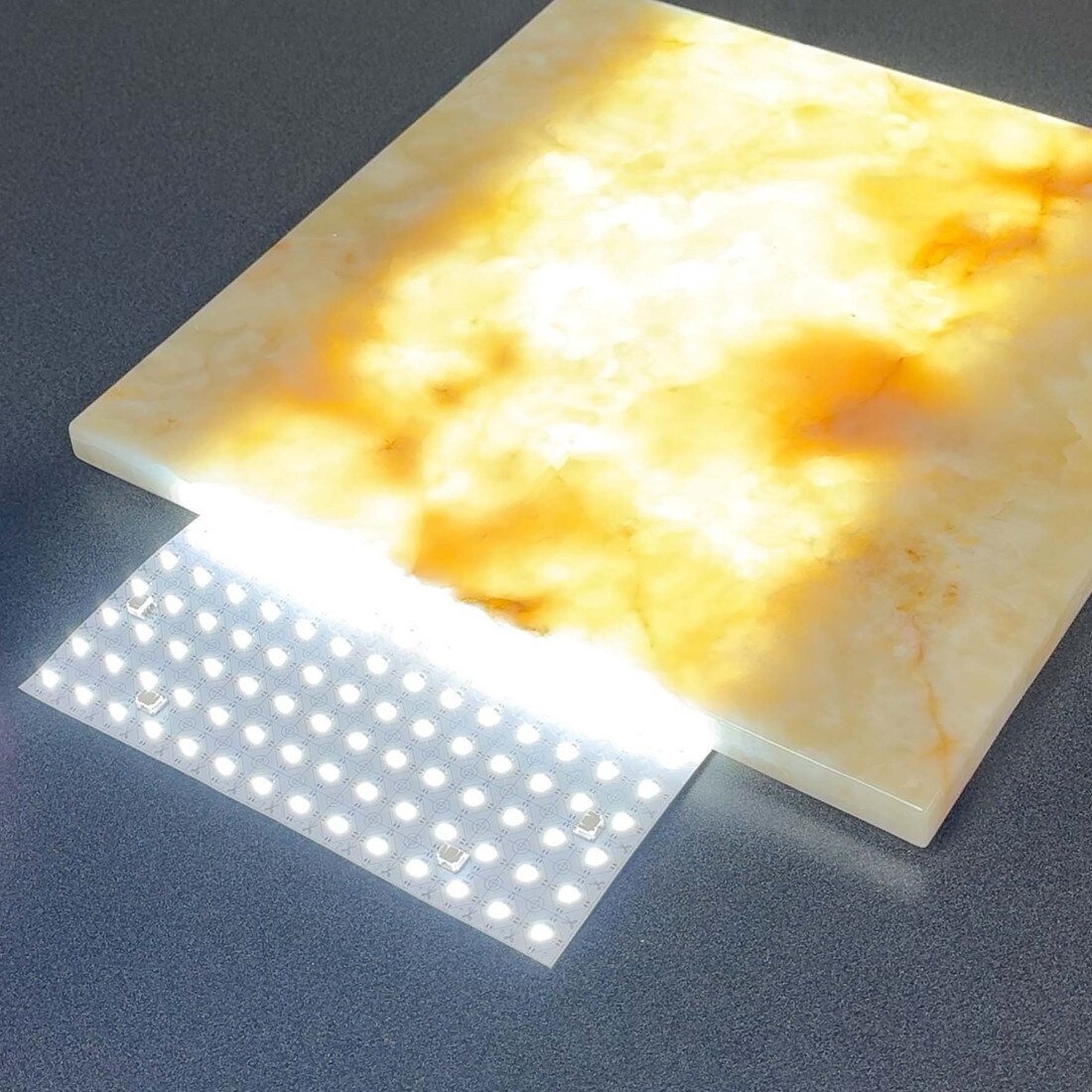
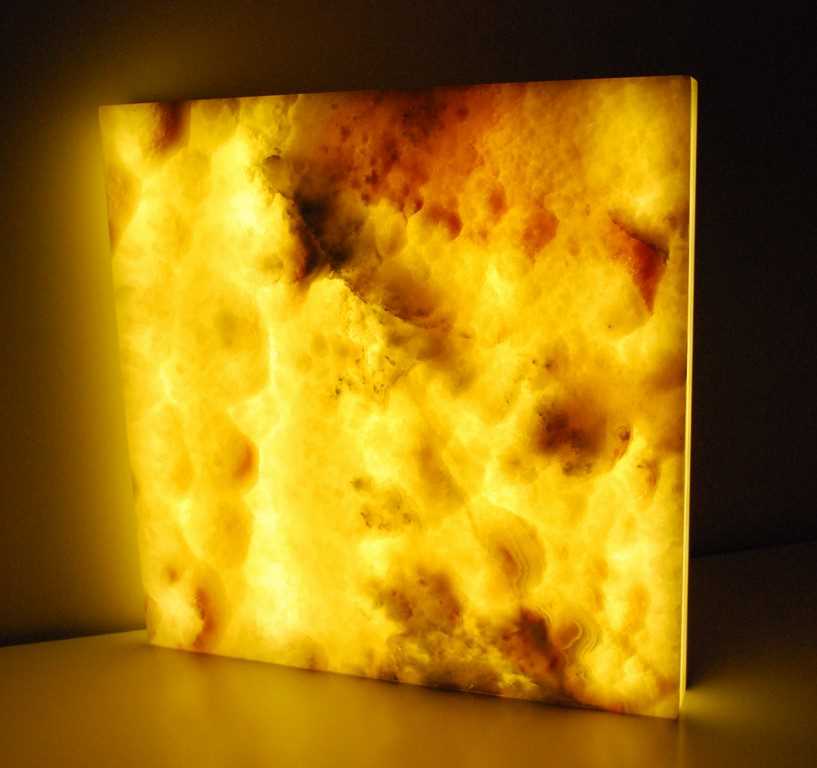
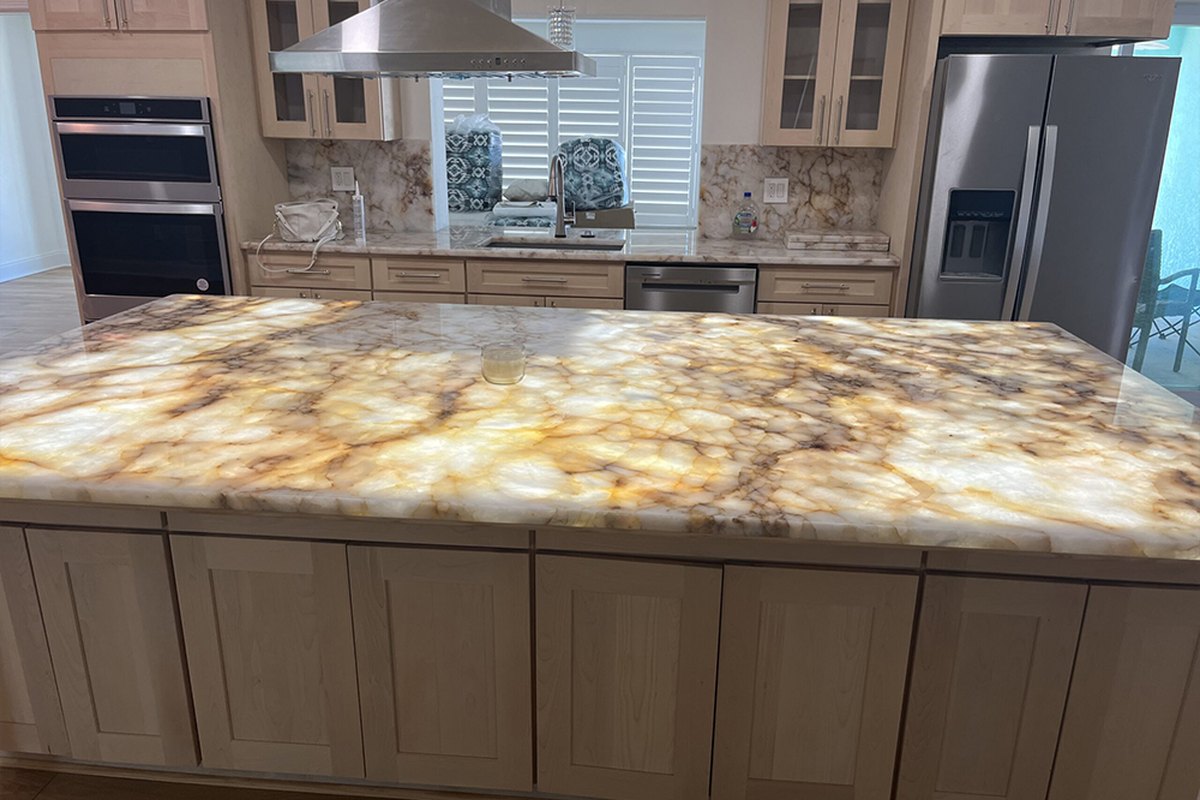
There is no single LED light sheet distance that hides dots for every material. For many backlit stone projects, 50 mm between the LED light sheet and the translucent stone surface is a reliable starting point. A 30-50 mm cavity can work when the sheet density, material transmittance, diffuser layer, and sample test support it. Below 30 mm, the risk of visible LED dots, seams, and structural shadows rises quickly.
Distance is only one part of the system. Material thickness, transparency, LED density, seam location, cavity reflectivity, diffuser choice, and voltage stability all affect whether the front surface looks smooth.
Recommended Starting Distances
| LED-to-face distance | Typical use | Risk level | Recommended action |
|---|---|---|---|
| 50 mm or more | Agate, onyx, translucent marble, resin panels, feature walls | Lower | Preferred starting point; still verify with samples. |
| 30-50 mm | Cabinets, bars, shallow stone walls, acrylic panels | Medium | Use high-density sheets, white reflective cavities, and mockups. |
| Less than 30 mm | Ultra-thin cabinets, retrofits, shallow light boxes | High | Add diffuser, change structure, or accept higher visual risk. |
| 80 mm or more | Deep decorative cavities | Low dot risk | Check brightness loss and reflective design. |
The LED light sheet applications guide explains why cavity depth matters for stone, signage, cabinetry, and display projects. For stone-specific planning, also review backlit onyx LED light sheets.
Why 50 mm Is a Starting Point, Not a Guarantee
A 50 mm cavity gives light more room to mix before it reaches the stone, acrylic, or diffuser face. This helps soften individual LED points, sheet seams, and edge shadows. But it does not guarantee a perfect result for every material. Thin high-transparency agate may still show details that milky acrylic hides easily. Dark veining can absorb light even when the cavity is deep enough.
That is why the final design should be approved with the actual face material, not only a drawing. Two slabs from the same stone family may transmit light very differently.
When the Cavity Is Below 30 mm
Below 30 mm, a diffuser panel is often no longer optional. The light source is too close to the surface, so bright dots, seam lines, cable shadows, and structural projections can become visible. A milky acrylic diffuser or frosted layer may reduce dot visibility, although it can also reduce brightness. In shallow projects, it is usually better to lose some brightness than to show a row of visible LED points.
Material Changes the Required Distance
| Material | What to watch | Planning note |
|---|---|---|
| High-transparency agate or jade | Dots, bright veins, local over-brightness | Start around 50 mm or deeper and test with samples. |
| Translucent marble | Dark veins and thickness variation | Use sample testing and avoid visible seams. |
| Milky acrylic | Dot pattern in shallow cavities | 30-50 mm may work with high density and diffuser design. |
| Clear or high-transparency acrylic | LED pattern very visible | Use deeper cavity, diffuser, or a different face material. |
| Resin or decorative panel | Variable transmission and aging | Test the actual panel, not just a similar sample. |
Check These Before Blaming the LED Sheet
- Are sheet seams located behind the most transparent face areas?
- Are studs, cable trays, connectors, or fasteners blocking light?
- Are inner cavity walls dark and absorbing light?
- Does the sheet extend far enough under the edge trim?
- Is voltage drop making the far end dimmer?
- Was the test done with the real stone, acrylic, or diffuser material?
If the answer to any of these is uncertain, build a sample before approving production. The installation mistakes guide covers several of these avoidable issues.
FAQ
Is 50 mm enough to hide all LED dots?
It is a strong starting point for many stone projects, but not a universal guarantee. Final approval should depend on the actual material sample and viewing conditions.
Can LED light sheets work at 30 mm depth?
Sometimes, especially with high-density sheets, less transparent materials, reflective cavities, and diffuser layers. For high-transparency stone or acrylic, 30 mm should be tested carefully.
Do I always need a diffuser panel?
No, but diffuser panels become more important when the cavity is shallow, the face material is highly transparent, or the project requires a very smooth glowing surface.