
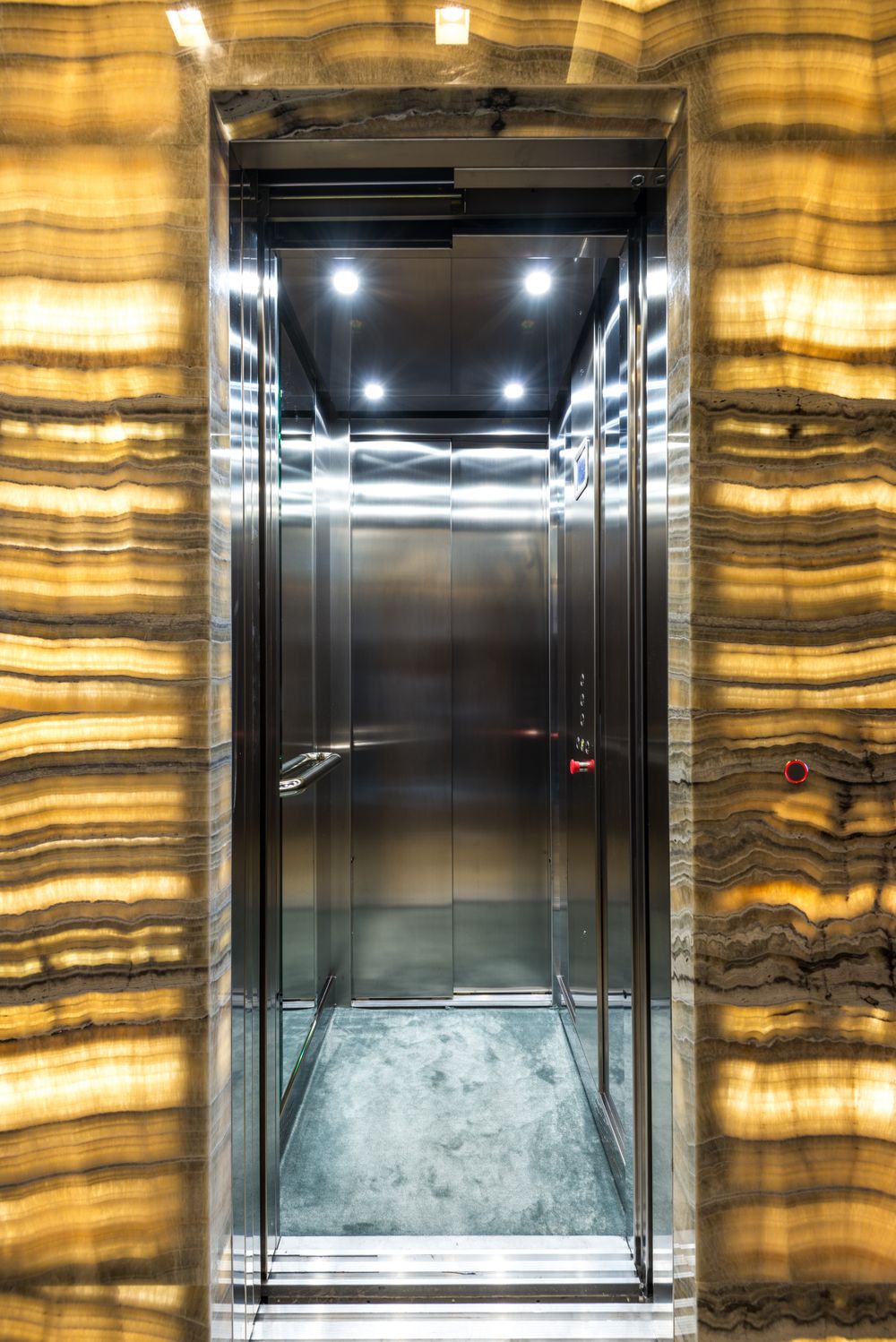
Backlit stone works best where people stop and look: reception desks, bar fronts, elevator lobbies, feature walls and vanities. Onyx gives the most dramatic glow; translucent marble and quartzite give a softer one. Below are the placements that work well in hotels, bars and high-end homes, with the practical details each one needs.
Ideas by space
Hotel reception desk
A backlit front panel makes the desk the first thing guests see. Keep the lit face at standing eye level, allow 50 mm or more behind the stone, and put the driver inside the desk where staff can reach it. Warm white (2700–3000K) suits most lobbies.
Elevator lobbies and corridors
Book-matched onyx around elevator doors turns a transit space into a feature. Light each wall as one surface so both halves of a book-match look the same, and use dimming so the brightness can drop at night.

Bar fronts and bar tops
The most common backlit stone feature in hospitality. Bar fronts are often shallow, so a dense light sheet and a sample test are important. For bar tops, the stone must be supported over the light, and the cavity must be protected from spills. RGBW or tunable white lets the bar change mood through the evening.
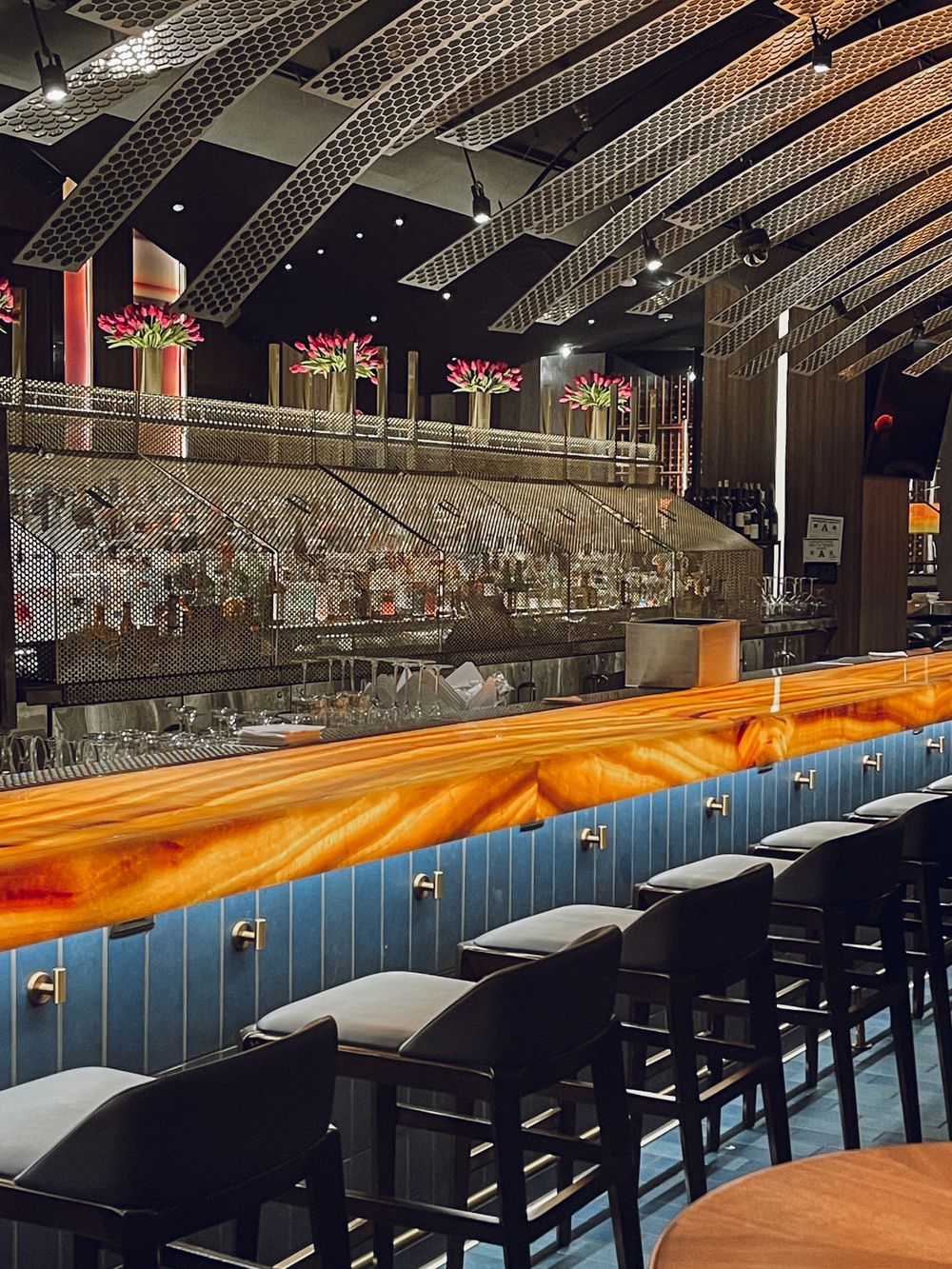
Restaurant and lounge feature walls
Large walls need the most planning: split the light into zones, keep seams behind dense veins, and plan access panels for the drivers. A dimmable system lets the same wall work at lunch and at dinner.
Spa, bathroom and vanity walls
Backlit stone behind a vanity or in a spa adds a soft, even light. These are damp areas, so use IP54 sheets, a sealed stone face, and keep the driver outside the wet zone. See LED light sheets in wet areas.
Residential: kitchen islands and wine rooms
An island front or a wine-room wall is a smaller, simpler project. Shallow cabinetry is the usual limit, so check the depth early and consider a diffuser.
Choosing the stone
- Onyx: strongest glow and color, shows hot spots most easily.
- Translucent marble: softer, more even light; needs more brightness.
- Quartzite and agate: dramatic patterns; agate is often thin and very translucent.
- Resin or engineered translucent panels: lighter, consistent and easy to light evenly.
Compare them in onyx vs marble vs quartzite.
Details that make or break the result
- Depth: start at about 50 mm between sheet and stone. See recommended distances.
- Color temperature: 2700–3000K for warm hospitality spaces; 4000K for a crisper, modern look. Use one CCT per surface.
- Dimming: plan it from the start; adding it later often means new drivers.
- Service access: drivers outside the cavity, behind a removable panel.
- Testing: approve the design with a light test behind the actual slab.
Bar Counter Layout, Power and Maintenance
On a bar counter, the LED sheet should not stop exactly at the visible edge; extend the light slightly under trims or stone returns to avoid dark edge bands. On feature walls, avoid seams at eye level or across the visual centre of the slab, and use veining, metal dividers or panel joints to hide the technical layout.
A wall or counter may look like one continuous surface, but electrically it should be split into zones. Keep power supplies and controllers accessible, and do not seal every driver and connector behind permanent stonework.
- Confirm the visible illuminated size, not just the outside stone size.
- Send stone photos, thickness and transmittance information.
- Plan seam positions before cutting or ordering sheets.
- Use zoned power to avoid voltage drop on long counters.
- Test one real stone sample before approving full production.
Getting a quote
Send the visible size, stone type and thickness, cavity depth, color and dimming requirements, and drawings. The RFQ checklist lists everything we need.
Related: real backlit stone projects · avoiding hot spots behind stone · backlit stone design guide