
Project Images and Application References
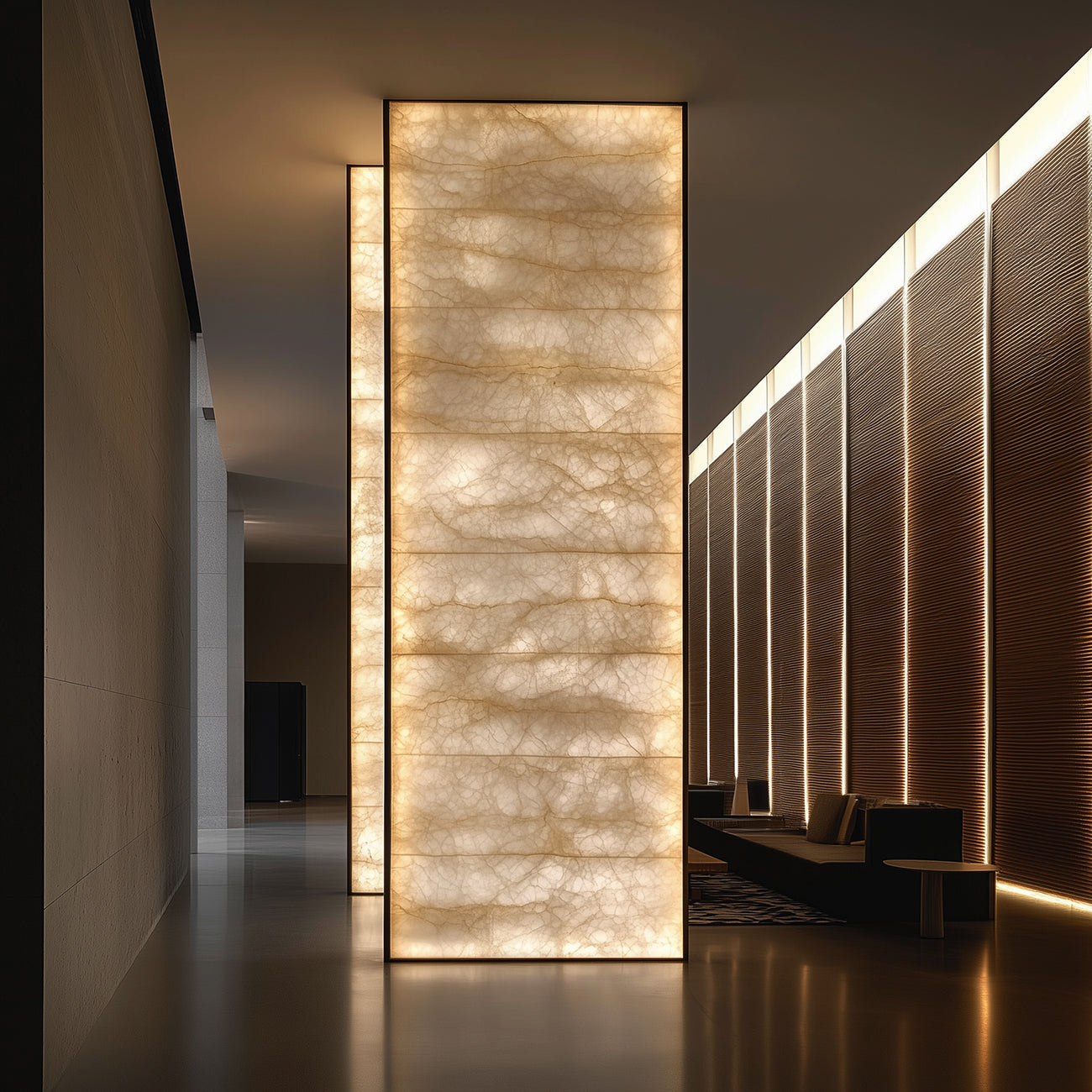
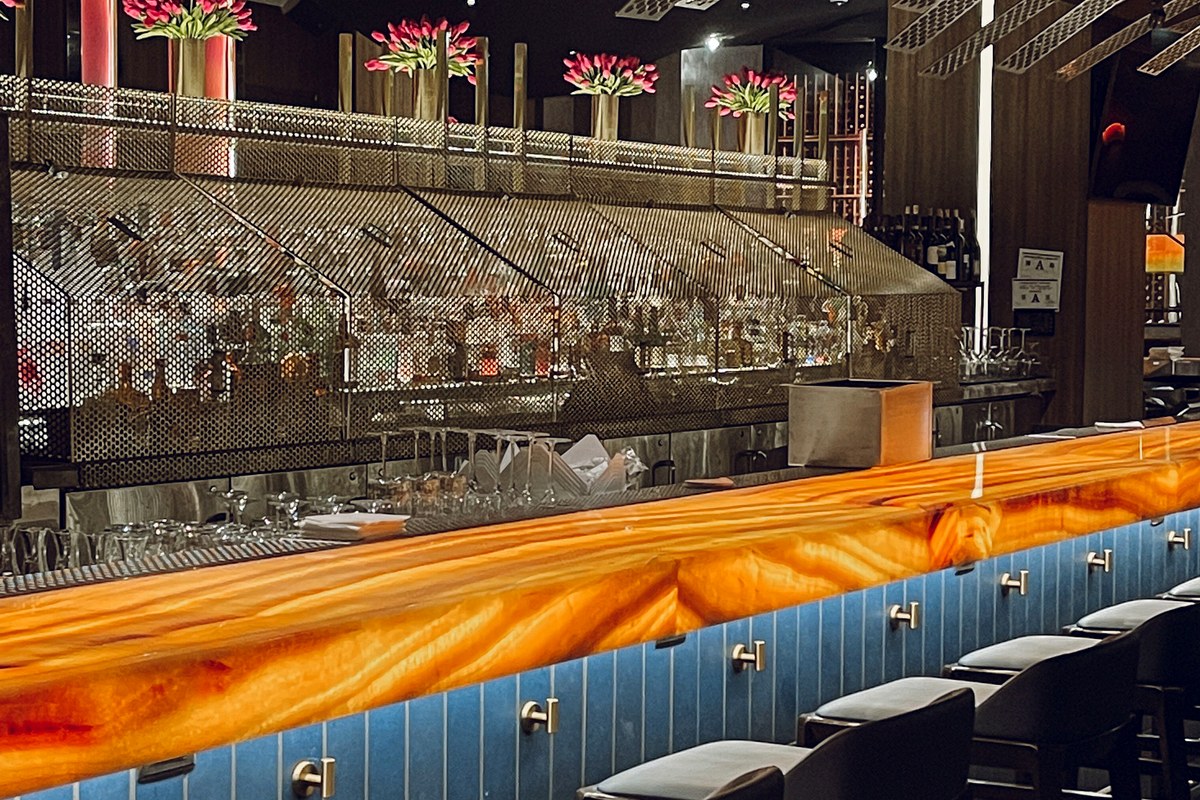
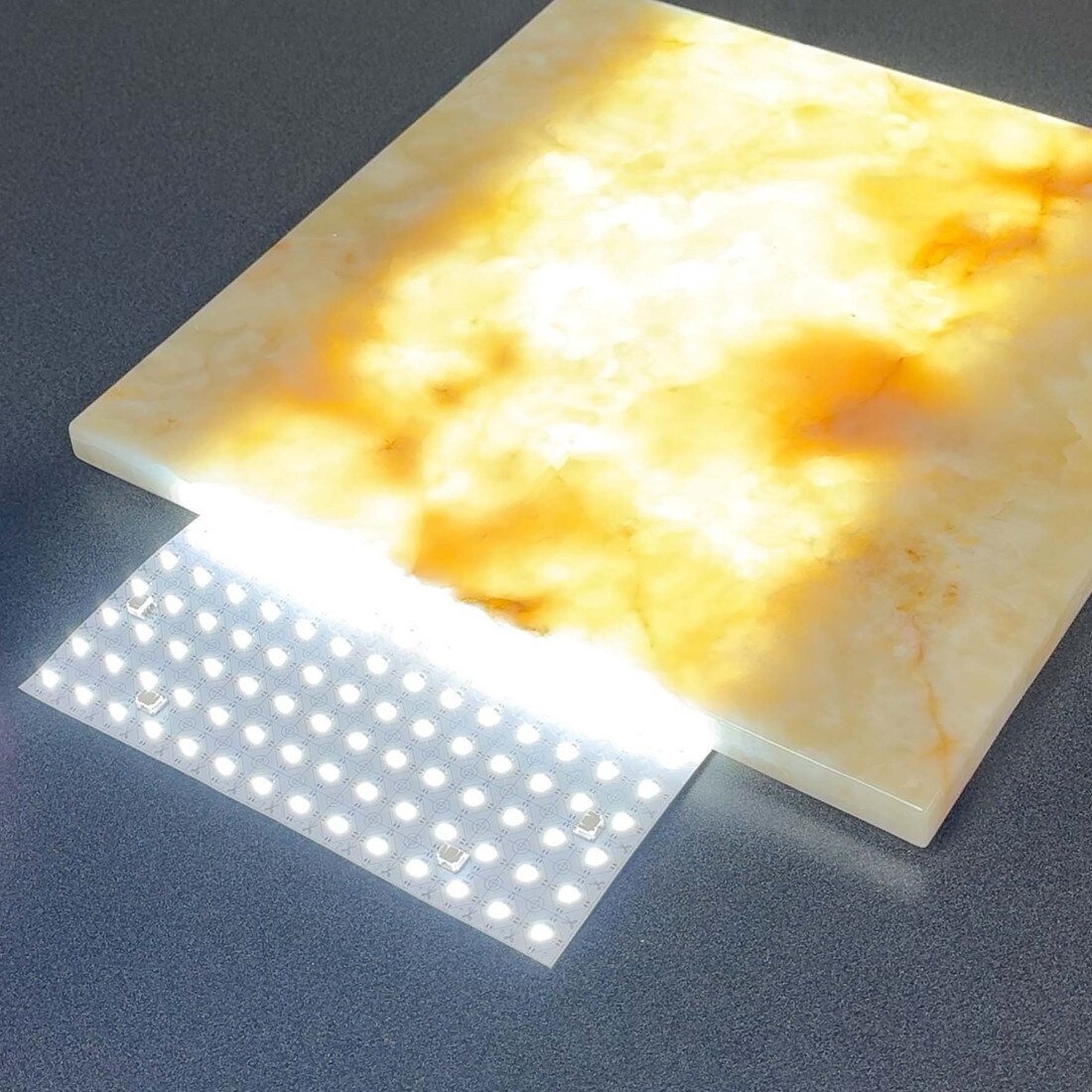
Backlit onyx lighting is not only a decorative effect; it is a full lighting system that must match stone transmittance, LED sheet density, cavity depth, power layout, and service access. For hotels, bars, reception counters, and luxury interiors, the visual target is usually a warm, continuous stone glow without obvious LED dots, dark seams, or uneven veining.
Many failed projects start with the wrong question: how bright is the LED sheet? The better question is whether the selected onyx, the available installation depth, and the electrical layout can work together. A bright LED light sheet cannot fix an opaque slab, a shallow cavity, or a poorly placed seam.
Start with the Actual Stone
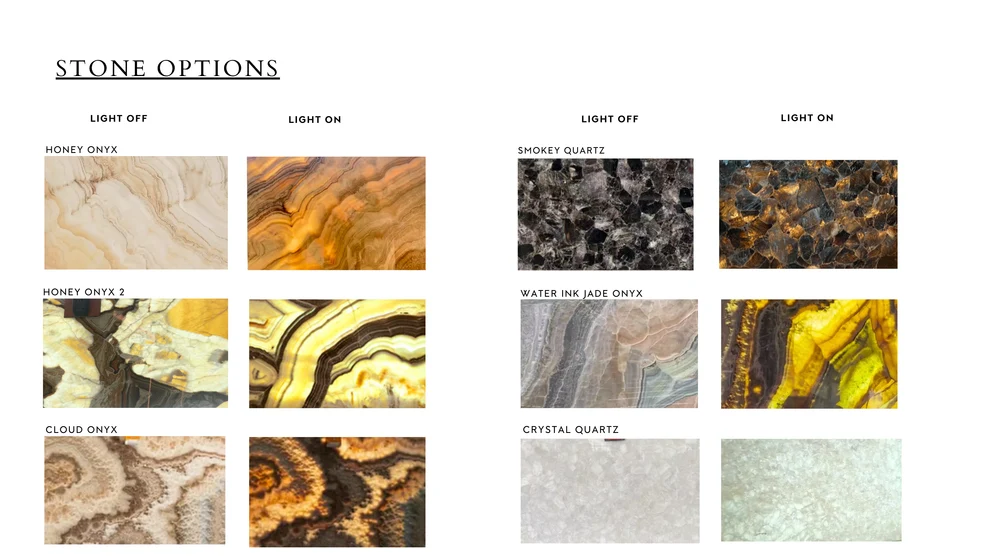
Onyx varies dramatically from slab to slab. Light-colored stone may transmit light easily, while dark or heavily veined pieces may need higher output, deeper cavity depth, or a different expectation for uniformity. Before final production, test the actual stone sample or a representative offcut. Do not approve the layout based only on a product photo.
For material-specific guidance, compare backlit onyx LED light sheets with dark veined stone backlighting. These pages explain why stone color, thickness, and veining matter as much as the LED product.
Design the Cavity Before Choosing the Sheet
| Design factor | Why it matters | Recommended action |
|---|---|---|
| Cavity depth | Controls dot hiding and light mixing | Start around 50 mm for premium onyx when possible |
| Stone thickness | Changes brightness and visible veining | Test actual slab or sample before production |
| Sheet seams | Can appear as straight dark lines | Hide seams under veins, trims, dividers, or low-focus areas |
| Cavity color | Dark cavities absorb light | Use white or reflective internal surfaces |
| Power zones | Prevent far-end dimming | Split long counters and walls into maintainable zones |
Hotel and Bar Counter Layout Tips
For a bar counter, the LED sheet should not stop exactly at the visible edge. In many cases, the light coverage should extend slightly under trim or stone return areas to prevent dark edge bands. For a feature wall, avoid placing seams at eye level or across the visual center of the slab. Let the stone veining, metal dividers, cabinet lines, or panel joints help hide the technical layout.
If you are still estimating the number of sheets, use the LED light sheet calculator and then validate the result with the LED light sheet layout guide.
Power and Maintenance Are Part of the Design
A hotel bar or wall panel may look like one continuous illuminated stone surface, but electrically it should be broken into logical zones. Power supplies and controllers should remain accessible. Large stone installations should not seal every driver, connector, and terminal behind permanent stonework.
- Confirm visible illuminated size, not just outside stone size.
- Send stone photos, thickness, and transmittance information.
- Plan seam positions before cutting or ordering sheets.
- Use zoned power to avoid voltage drop on long counters.
- Test one real stone sample before approving full production.
When to Request Layout Review
If the project involves expensive onyx, hotel interiors, long bar counters, or a large feature wall, send dimensions, stone photos, cavity depth, power location, and control requirements through the LED light sheet quote request page. A layout review can prevent many costly installation surprises.