
Project Images and Layout References
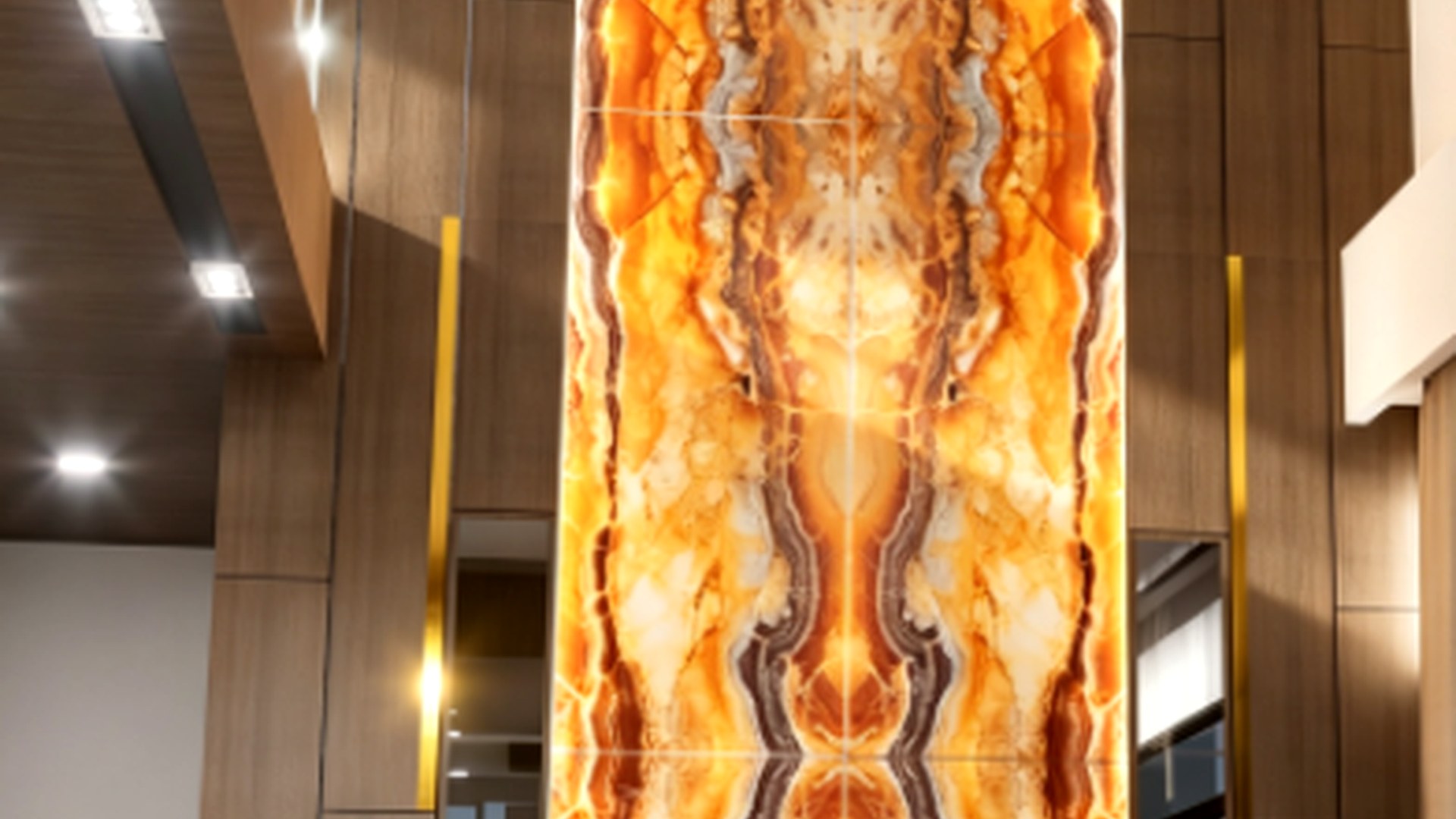
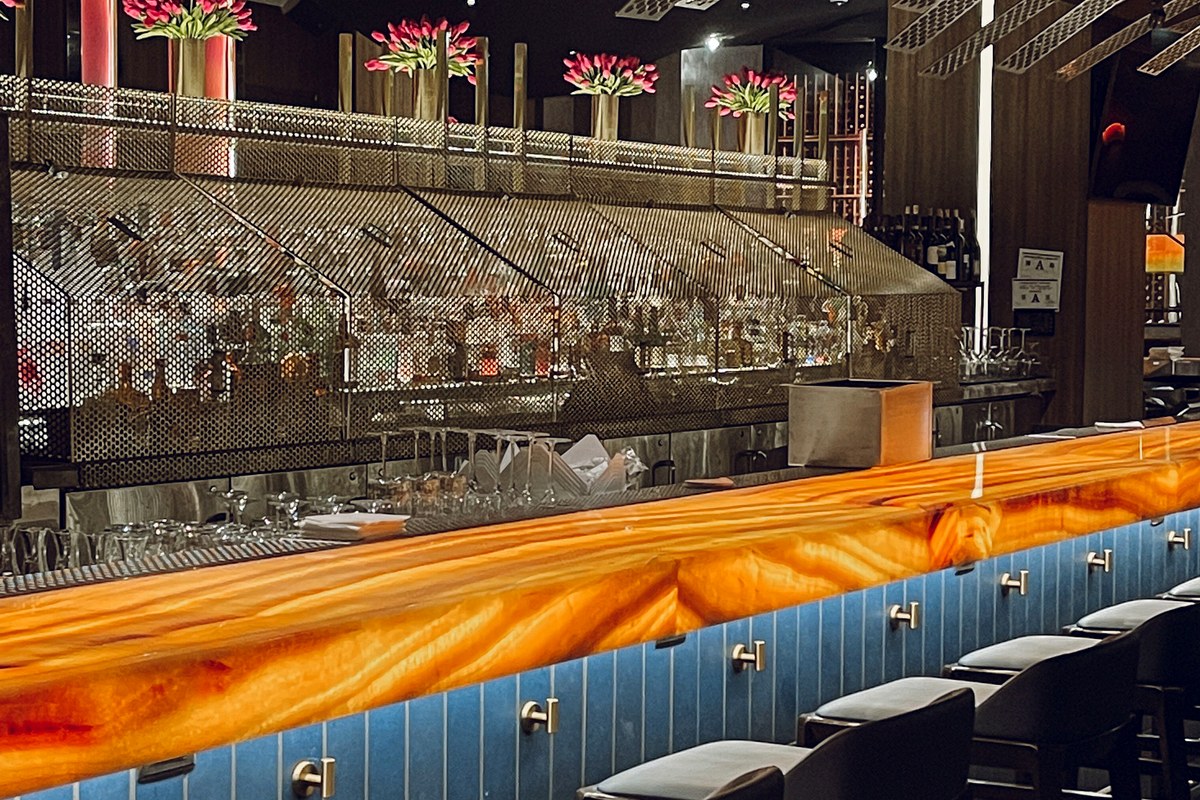
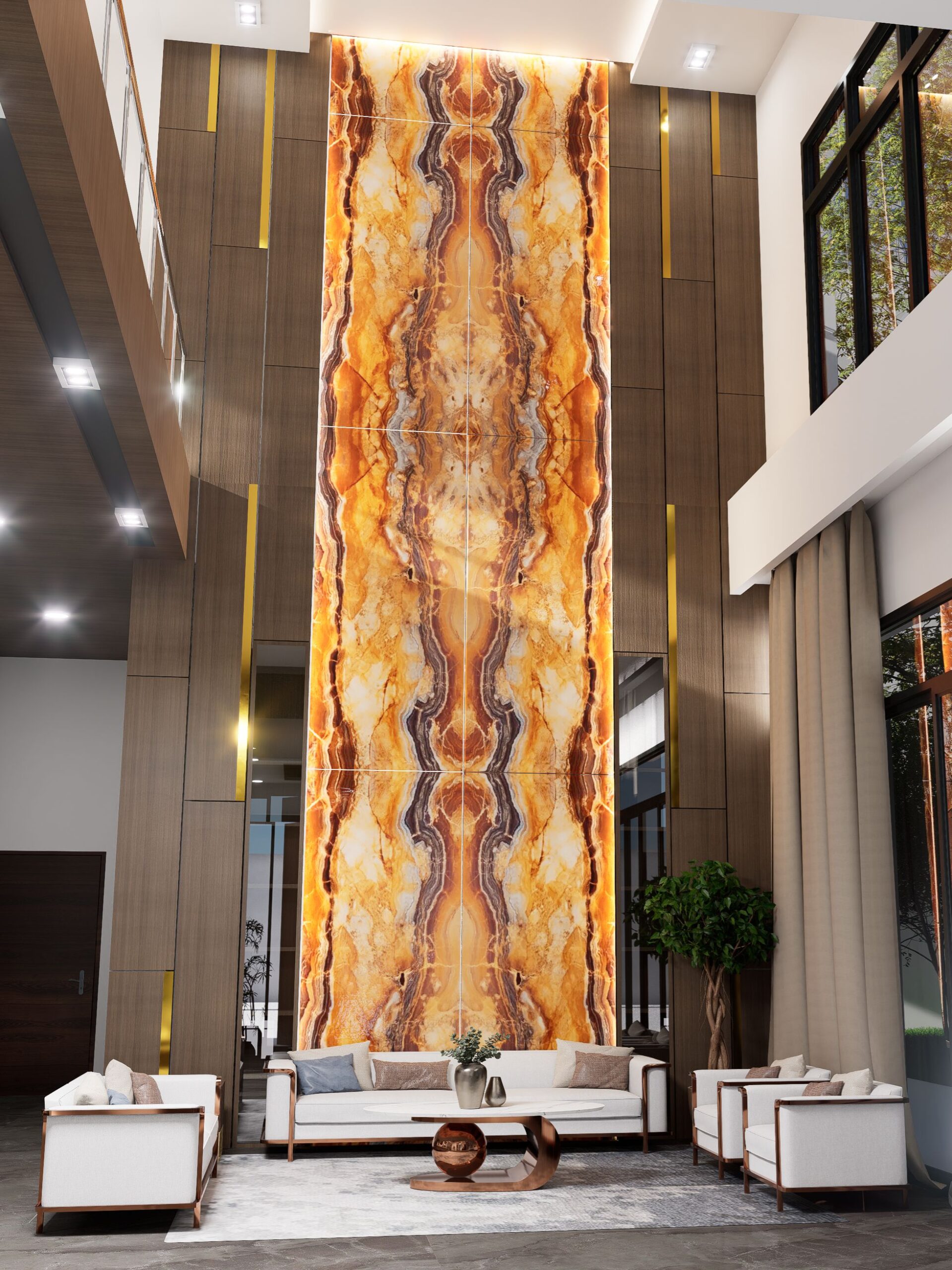
A backlit stone wall does more than add light to a room. It turns the stone into an illuminated architectural surface. Instead of seeing only the face of the slab, the viewer sees depth, veining, color variation and a controlled internal glow. That is why backlit stone walls are often used in hotel lobbies, bars, restaurants, reception areas, luxury homes and high-end retail interiors.
Related project planning links: LED light sheet for backlit stone design guide; backlit stone wall LED light sheets.
For designers and fabricators, a backlit stone wall should be planned as a complete system. The final result depends on the stone, LED light sheet layout, cavity depth, diffusion, power supply, control method and access for future service. When those decisions are made early, quotation, production and installation become much smoother.
Why Backlit Stone Walls Work in Luxury Interiors
Luxury interiors usually need one strong visual anchor. A backlit stone wall can create that anchor without adding visual clutter. Onyx, translucent marble, quartzite, resin stone and selected acrylic panels can show dramatic texture when light passes through them. The same wall can feel different during the day and at night, especially when the lighting system includes dimming or adjustable color temperature.
Warm white backlighting can make stone feel richer and more welcoming. Neutral white can keep the material closer to its natural color. Cool white can make veins look sharper, but it can also make some interiors feel colder. The best choice depends on the stone sample, the room design and the atmosphere the client wants.
Best Places to Use a Backlit Stone Wall
Backlit stone walls work best where people stop, look and remember the space. Common locations include hotel reception walls, lobby feature walls, bar back walls, restaurant entry walls, elevator lobby walls, private dining rooms and luxury residential feature walls.
In commercial interiors, the wall can also support brand identity. It can be combined with a logo, metal trim, glass, millwork or display shelving. In retail spaces, it can add premium visual value behind jewelry, fragrance, watches, cosmetics or other luxury products.
Which Stones and Materials Can Be Backlit?
Onyx is one of the most common choices because it often has strong translucency and expressive veining. Some marble, quartzite and engineered translucent stone can also work well, but every material should be tested with real light before final design. A stone name alone is not enough. Thickness, batch, vein density and finish can all change the lighting effect.
During sample testing, check whether LED points are visible, whether some veins are too bright or too dark, and whether the selected color temperature improves the stone or makes it look unnatural. If the material transmits light unevenly, the project may need more cavity depth, a diffusion layer or a more uniform LED light sheet layout.
How LED Light Sheets Help Create Uniform Light
Traditional LED strips are linear light sources. If the installation depth is limited, strips can create bright lines, dark bands or visible LED points. LED light sheets behave more like a distributed flat backlight source. The LEDs are spread across the sheet, helping create smoother illumination behind translucent materials.
For wall projects, LED light sheets also make layout planning easier. A large wall can be divided into zones for power, control and service access. This matters because a feature wall is not only about appearance. It also needs reliable wiring, enough power capacity and a practical maintenance plan.
Design Ideas by Project Type
For hotel reception walls, large-format onyx or translucent marble can create a strong first impression. Warm white or CCT adjustable light is often a good choice because hospitality spaces need to feel comfortable and welcoming.
For bar back walls, stronger stone veining and dimming control can create a more dramatic atmosphere. The light does not need to be at full brightness all the time. A lower dimmed level can make the stone glow without overpowering the room.
For restaurants and private clubs, a backlit stone wall can work as an entry feature or dining-room focal point. Brightness should be controlled carefully. If the wall is too bright, it can distract from the dining experience. If it is too dim, the material may lose its impact.
Power, Wiring and Control Considerations
A large backlit wall should not be planned only by estimating the number of light sheets. The design should also consider total wattage, power supply reserve, wiring zones, controller capacity and voltage drop. 24V LED light sheets are often useful for larger layouts because they are easier to manage over longer wiring runs than many 12V systems, but the final decision depends on the selected model, wire distance and zoning.
Power supplies should include reserve capacity, and controllers must match the light sheet type. Single-color, CCT, RGB and RGBW systems use different control methods. For high-end projects, the layout and electrical plan should be reviewed before production.
What to Prepare Before Requesting a Quote
Before requesting a quote, prepare the wall dimensions, stone type, stone thickness, available cavity depth, preferred color temperature, dimming requirements, power supply location, site photos and project drawings if available. If the sheet quantity is still unclear, start with the LED Light Sheet Calculator for an early estimate.
A successful backlit stone wall is not created by the light source alone. It comes from the coordination of material, structure, LED light sheet layout, power supply and control method. The best results start with clear planning and real sample testing.
Backlit Stone Wall Lighting Guide for Designers and Contractors
Quick answer: A backlit stone wall should be specified as a complete lighting system, not only as a decorative stone idea. Designers need to decide the visual target, color temperature, dimming expectation, and material sample approval. Contractors need the cavity depth, LED sheet layout, power zones, cable exits, driver access, and service plan before the stone wall is closed.
Designer and Contractor Decision Table
| Decision | Designer focus | Contractor focus |
|---|---|---|
| Stone selection | Color, veining, translucency, and mood. | Thickness, backing, sample test, and how veins affect light. |
| Lighting method | Smooth glow without visible striping or harsh dots. | LED light sheet layout, diffusion distance, frame shadow control, and wiring route. |
| Color temperature | Warm hospitality look, neutral retail look, or tunable white control. | Driver/controller compatibility and sample approval at the chosen dimming level. |
| Power zones | Consistent brightness across the visible wall. | Zone labels, feed points, voltage drop, driver capacity, and service access. |
| Maintenance | Clean finished appearance. | Accessible drivers, controllers, splices, and removable service panels. |
Specification Workflow
- Choose a real stone sample and record its thickness, backing, and translucency.
- Define the visible illuminated area, hidden margins, and support-frame location.
- Use LED light sheet vs LED strip guidance to decide whether strips can blend or whether sheets are safer.
- Estimate panel area and load with the backlit stone LED calculator.
- Plan voltage, driver capacity, controller access, cable exits, and dimming method with the power supply and controller guide.
- Approve a mockup before final stone fabrication when the wall is visually critical.
Stone Sample Testing Checklist
- Test the actual slab or a representative offcut, not only a supplier photo.
- Check full brightness and dimmed levels because hotspots can appear differently after dimming.
- Review warm white, neutral white, tunable white, or RGBW choices behind the real material.
- Photograph the sample with the intended cavity depth and note any dark veins or resin patches.
- Confirm whether the owner accepts natural variation before bulk production.
Common Mistakes
- Designing the stone frame before confirming driver and controller access.
- Using LED strips in a shallow wall and expecting a luxury uniform glow without testing.
- Approving color temperature from a catalog instead of behind the real stone.
- Forgetting cable exits until the stone support structure is already built.
- Promising no hotspots instead of explaining sample testing, diffusion, and installation limits.
FAQ
What should designers decide before specifying a backlit stone wall?
Designers should decide visual mood, color temperature, dimming expectation, visible illuminated area, sample approval process, and whether the stone variation is acceptable to the owner.
What information do contractors need before installation?
Contractors need cavity depth, LED sheet layout, power zones, cable exit points, driver and controller locations, service access, and approved wiring method.
Are LED light sheets better than LED strips for stone walls?
LED light sheets are often safer for shallow, wide, and visually critical walls. LED strips can still work when the cavity is deep enough and diffusion is tested.
Can all stone materials be backlit?
No. Results depend on stone translucency, thickness, backing, veining, resin, color, and sample testing. The actual material should be tested before final approval.
When should a project use the quote form?
Use the quote form when you have size, drawings, material photos, cavity depth, voltage, dimming requirement, quantity, and project country ready for review.
Use the calculator for early sizing, then send drawings and sample information for review before final fabrication.