
Visual Reference for This LED Light Sheet Topic
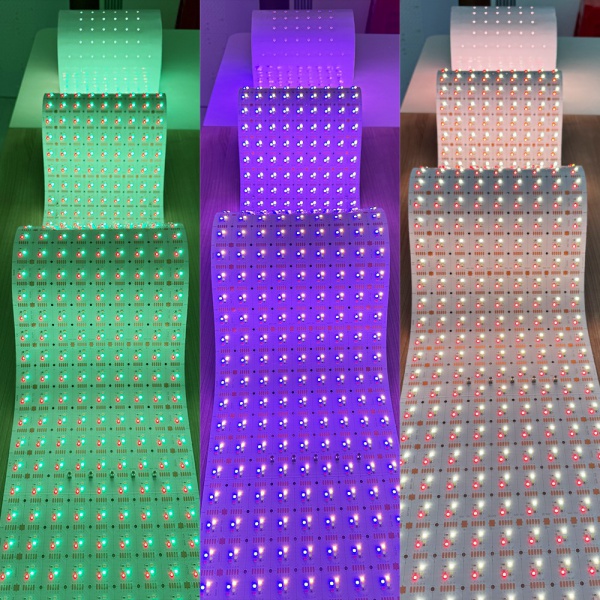
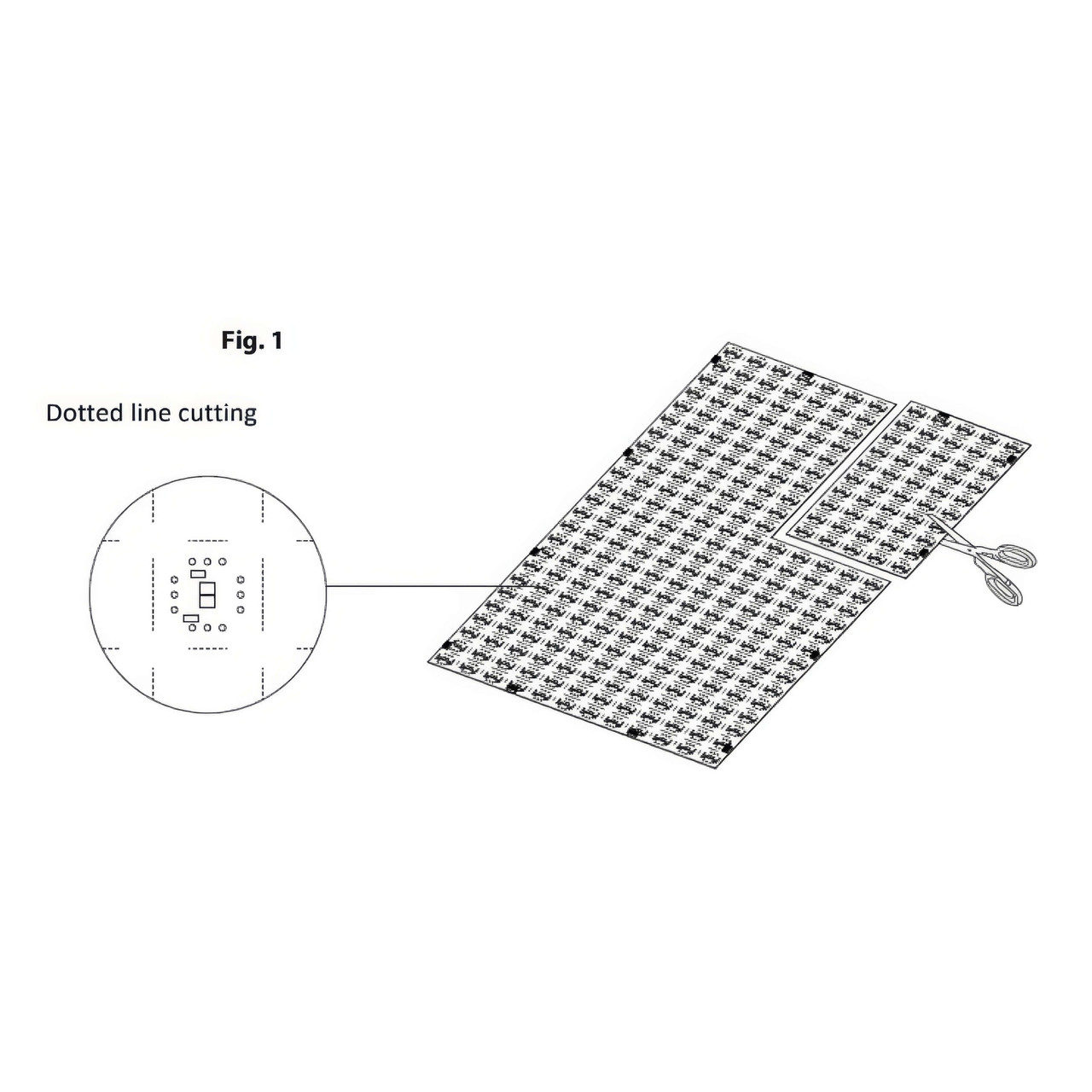
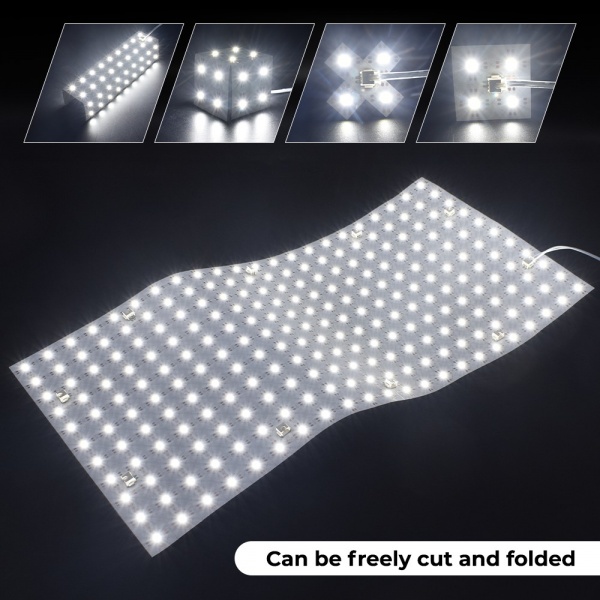
Yes, LED light sheets can often be custom cut for non-standard projects, but only within the safe cutting rules of the specific sheet model. A flexible LED light sheet is not like fabric or acrylic that can be trimmed anywhere. The PCB circuit, LED positions, copper traces, solder pads, and factory scoring lines determine where the sheet can be cut safely.
For stone backlighting, display cabinets, shelving, signage, and architectural panels, the right question is not just “Can this exact size be cut?” It is “What is the actual illuminated size after trim, masking, frame overlap, safe cutting units, wiring access, and power zoning are considered?” That layout-first approach reduces the risk of open circuits, dark edge bands, visible seams, and field rework.
Why Non-Standard Size Does Not Mean Any Size
Most LED light sheet projects start with a visible finished size, such as a stone panel, acrylic face, cabinet back panel, or light box opening. But the light sheet should not automatically be cut to that outside dimension. You first need to subtract frame coverage, trim, blocked edges, tolerances, and any non-illuminated borders.
After that, the light sheet size should be rounded to the nearest safe cutting grid. If the customer requests 23.6 x 41.2 in, the final sheet layout may not be exactly 23.6 x 41.2 in. A better layout may use a safe cut line, hide extra material under trim, or use a reflective edge cavity to protect both the electrical circuit and the visual result.
Safe Cutting Rules for LED Light Sheets
- Cut only along manufacturer-marked scoring or dashed cutting lines.
- Do not cut through LED beads, copper traces, solder pads, connectors, or unmarked PCB areas.
- Confirm the cutting unit for the exact model, because white, RGB, RGBW, CCT, and high-density sheets may use different cutting rules.
- Disconnect power before cutting, marking, soldering, or modifying wiring.
- Test the sheet after cutting and before final sealing behind stone, acrylic, or millwork.
For model-specific examples, review the 242 LEDs LED light sheet, the 640 LEDs RGBCCT LED light sheet, and the main flexible PCB LED light sheets product page.
How to Plan a Custom Cut Layout
| Step | What to confirm | Why it matters |
|---|---|---|
| 1 | Visible illuminated area | Prevents ordering by outside dimensions that include trim or hidden borders. |
| 2 | Safe cutting grid | Protects PCB circuits and keeps each LED unit functional. |
| 3 | Seam and edge position | Helps hide joints under stone veining, frames, or shadow lines. |
| 4 | Wire exits and access | Prevents connectors and service points from being sealed in unreachable places. |
| 5 | Power zones | Reduces voltage drop and brightness differences in large layouts. |
What About Irregular Shapes?
Irregular shapes such as angled stone niches, trapezoid panels, L-shaped displays, and corner cutouts can be possible when the shape aligns with safe scoring lines. If the angle or curve does not match the cut grid, do not force the PCB to follow the exact edge. Use a safe rectangular or angled sheet layout, then manage the visible shape with masking, reflective cavity design, trim, or panel structure.
Example: Custom Backlit Stone Panel
Suppose a designer specifies a 600 x 1200 mm visible backlit stone panel, but the frame covers 15 mm on every side. The illuminated area should be planned closer to 570 x 1170 mm, then rounded to the safe cutting grid of the selected sheet. If the sheet cannot match that exact size, a small hidden overlap under the frame is usually safer than cutting through an electrical circuit.
For a quote-ready project, send visible dimensions, frame details, material photos, cavity depth, cutting requirements, cable exit direction, and preferred control method. The custom LED light sheet project requirements page explains what information helps turn a custom size into a buildable layout.
FAQ
Can I cut an LED light sheet with scissors?
Only if the product documentation allows it and only along marked cutting lines. Never cut through LEDs, copper traces, or unmarked PCB areas.
Can a curved stone edge be matched exactly?
Usually not by cutting the sheet into a freeform curve. A safer approach is to use a cuttable grid layout and shape the final visible edge with trim, masking, or reflective cavity design.
What should I send before requesting a custom cut quote?
Send visible dimensions, drawings, material type, thickness, photos, available cavity depth, power location, cable exit direction, color temperature, and whether dimming or RGB/CCT control is required. You can also request a custom LED light sheet quote.