
LED light sheet power planning
LED Light Sheet Power Supply Guide: Wattage, Drivers and Wiring
Choosing the right LED light sheet power supply is not only about matching a voltage label. A reliable project needs the right wattage reserve, wiring layout, dimming method, cable distance, installation environment and service access. This guide explains how to size a constant-voltage LED power supply for LED sheet lighting used in stone backlighting, signs, displays, millwork and custom illuminated surfaces.
Add the wattage of every LED light sheet section, then keep a practical safety margin for the LED driver instead of running it at full load.
Large backlit panels often need multiple power injection points to reduce voltage drop and brightness difference.
Single-color, tunable white, RGB and RGBW LED sheets need different controller and driver planning.
Why Power Supply Planning Matters for LED Light Sheets
LED light sheets are usually selected because the project needs a thin, even and customizable light source. They are often used behind translucent stone, acrylic signs, retail display panels, hospitality feature walls, elevator interiors, countertop details and architectural surfaces. In these projects, the visible result depends on more than the sheet itself. The LED power supply and wiring layout decide whether the installation stays stable, dimmable and evenly illuminated after handover.
Many searchers type broad phrases such as power supply for LED lights, LED power supply or LED light power supply. For LED light sheets, the answer needs to be more specific: most sheet systems use a constant-voltage LED power supply, commonly 12V DC or 24V DC, selected according to the sheet specification, wattage per square foot or per module, maximum run length and control system.
If a power supply is undersized, overloaded or installed far from the light sheet without proper cable planning, the project may suffer from dim edges, unstable dimming, flicker, heat buildup or premature driver failure. Good planning is cheaper than field troubleshooting.
Quick Formula: How to Size an LED Light Sheet Power Supply
The basic calculation is simple, but the real project should always be checked against the actual LED sheet datasheet and wiring drawing.
Total LED sheet wattage = LED sheet wattage per piece or area x quantity
Recommended LED power supply wattage = total LED sheet wattage x 1.2 to 1.3
For example, if a backlit stone wall uses LED sheets with a combined load of 160W, a 200W constant-voltage power supply is usually a better planning starting point than a 160W unit. The extra capacity helps the driver run cooler and allows for normal tolerance in real installation conditions.
For faster estimation, use the LED light sheet calculator to estimate sheet quantity and power demand, then confirm the final driver model with the LED power supplies page or a project-specific wiring layout.
Constant-Voltage LED Power Supply: The Standard Choice
Most LED light sheet products are designed for constant-voltage operation. The power supply provides a fixed DC voltage, while the LED sheet structure controls current through its circuit design. This is different from constant-current LED drivers used for some high-power LED modules or fixtures.
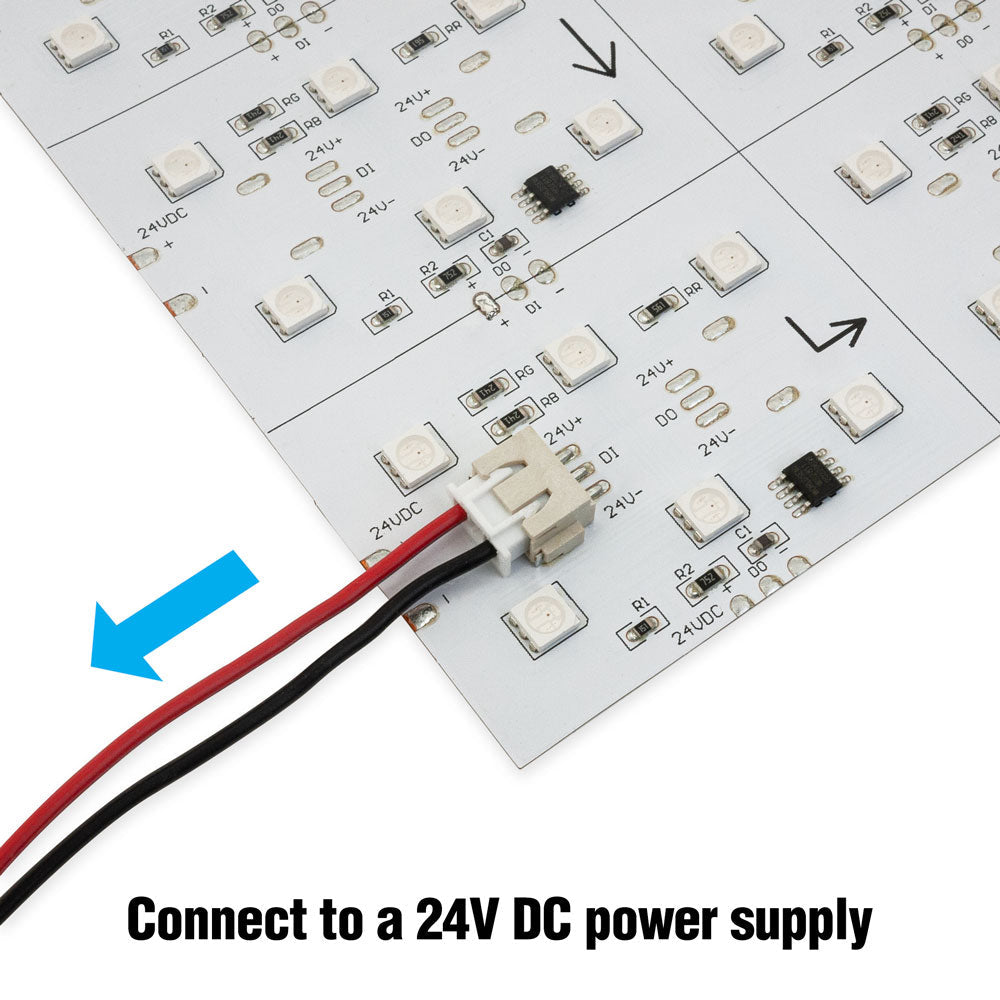
The voltage must match the LED light sheet specification. A 24V LED sheet should be powered by a 24V DC LED power supply. A 12V LED sheet should be powered by a 12V DC supply. Mixing voltage ratings can damage the light sheet or create unstable brightness.
| Planning item | What to check | Why it matters |
|---|---|---|
| Output voltage | 12V DC or 24V DC according to the LED sheet model | Wrong voltage can cause failure, overheating or weak output. |
| Rated wattage | Total load plus reserve, usually 20% to 30% | A margin reduces stress on the LED driver. |
| Environment rating | Indoor IP20, damp-location or IP67 according to the site | Cabinets, stone walls and outdoor signs have different requirements. |
| Dimming compatibility | PWM, 0-10V, DALI, TRIAC-compatible system or controller output | The wrong dimming method can create flicker or limited dimming range. |
| Service access | Driver location, ventilation and replacement access | Do not bury drivers in a sealed inaccessible cavity. |
12V vs 24V LED Light Sheets
Both 12V and 24V LED light sheets can work well when used correctly. For small decorative panels, short runs and compact signs, 12V may be acceptable. For larger architectural panels, long cable distances and multi-sheet zones, 24V is often preferred because it can reduce current for the same wattage and help manage voltage drop.
Voltage drop is the loss of voltage along the wire or circuit path. When it becomes significant, the LED sheet may be brighter near the feed point and dimmer at the far end. This is especially important for long illuminated surfaces, stone slabs, light boxes and custom panels where the viewer expects uniform brightness.
Wiring Layout: One Driver, Multiple Zones or Multiple Drivers?
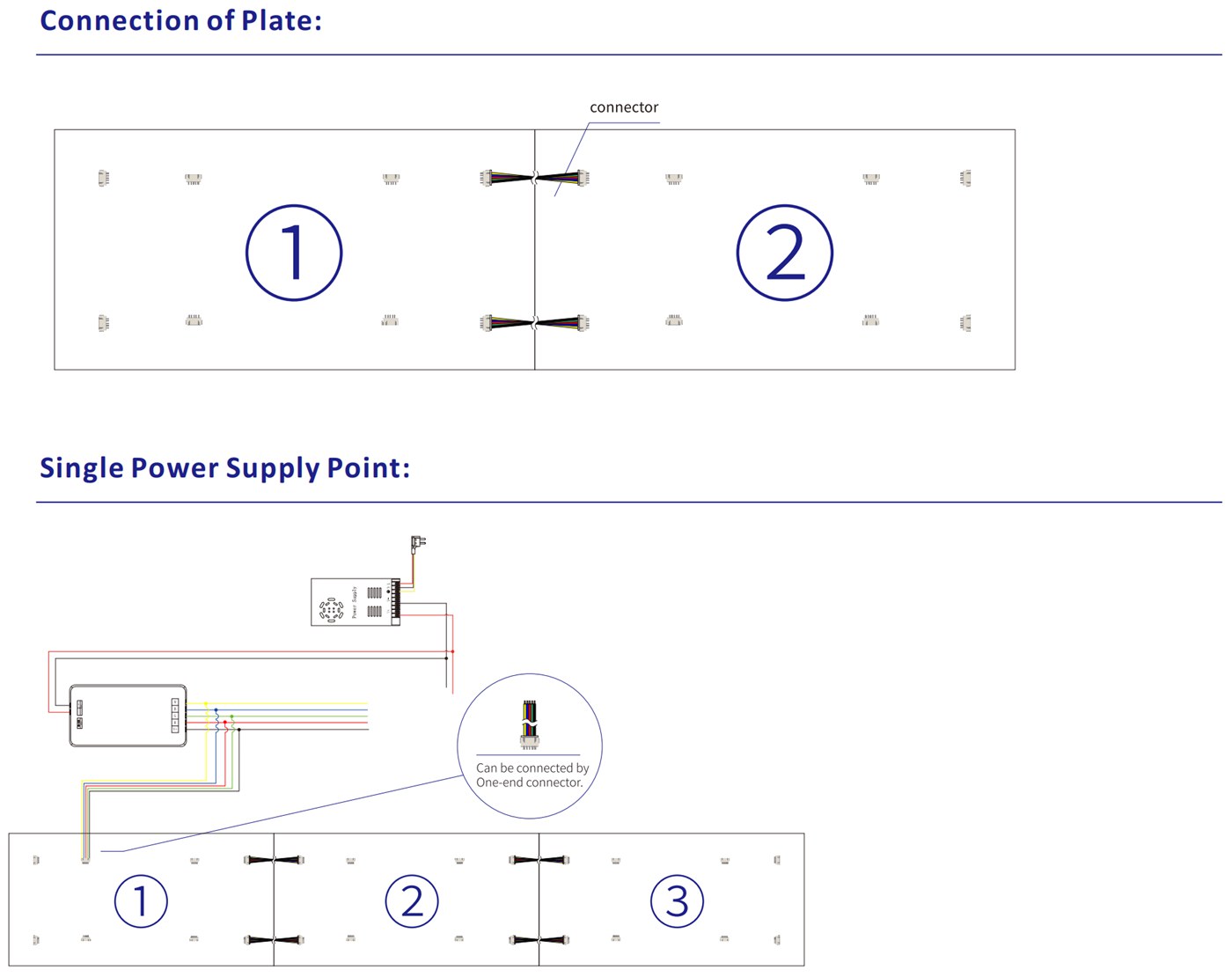
The correct wiring layout depends on total wattage, panel size, control zones, cable distance and access. A small display may use one compact power supply and a simple dimmer. A large backlit stone wall may need several drivers, separated zones and multiple low-voltage cable feeds.
Use one power supply when the project is small and close together
A single LED power supply can be practical when the total load is within the driver rating, the cable distance is short, the voltage drop is acceptable and all LED sheets should behave as one zone.
Use multiple zones when brightness or service control matters
Zones make it easier to control different parts of a project and reduce electrical stress on one long circuit. For a large translucent stone wall, zoning also helps installers test sections before the final stone or acrylic surface is closed.
Use multiple power supplies when total load or distance requires it
When a project becomes large, using one oversized remote power supply can create cable loss and difficult service work. Multiple appropriately located power supplies can keep cable runs shorter and simplify troubleshooting.
Dimming and Control Options
The power supply choice must match the control system. A non-dimmable LED power supply is not the right choice if the project requires smooth brightness control. For single-color LED light sheets, a PWM dimmer or a dimmable constant-voltage driver may be used depending on the system design. For tunable white, RGB or RGBW LED sheets, a controller is required between the power supply and the sheet.
For architectural projects, the designer may request 0-10V, DALI, DMX or a smart control protocol. In that case, the LED light sheet, controller, power supply and control interface should be planned as one system, not purchased as separate unrelated parts.
If the project uses RGBW panels, review the LED controllers together with the driver specification so the controller output current, channel count and voltage match the LED sheet layout.
Application Examples
| Application | Typical power supply concern | Recommended planning action |
|---|---|---|
| Backlit stone wall | Large illuminated area, heat, service access and uniformity | Use 24V constant-voltage planning, zone the wall, keep drivers accessible and confirm brightness before stone installation. |
| Retail display or shelving | Frequent operating hours and compact cavities | Choose reliable drivers with adequate reserve and ventilation; avoid overloading small cabinet power supplies. |
| Sign panel or light box | Consistent face brightness and long cable runs | Plan multiple feed points and check voltage drop across the full sign width. |
| Countertop or bar front | Moisture, service space and hidden wiring | Confirm IP rating, cable route and driver access before millwork is closed. |
For stone-specific projects, also see the backlit stone wall LED light sheet guide and the article on how to choose LED light sheets for backlit onyx, marble and quartz.
Common Mistakes to Avoid
- Choosing only by price: Low-cost LED power supplies may not handle continuous architectural use well, especially in warm or enclosed spaces.
- Running the driver at 100% load: A driver loaded to its limit can run hotter and may fail earlier.
- Ignoring cable length: Even a correctly sized driver can perform poorly if the low-voltage cable is too long or too thin.
- Mixing dimming systems: A dimmer, driver and controller must be compatible. The label “dimmable” is not enough by itself.
- Hiding the driver permanently: Power supplies are service parts. They should be located where future inspection and replacement are realistic.
- Testing only one small sample: For stone, acrylic and fabric surfaces, test the real material, real distance and real control level before final installation.
Recommended Project Workflow
- Confirm LED sheet voltage, wattage and cuttable area from the product specification.
- Calculate total wattage for each surface or lighting zone.
- Add a 20% to 30% reserve when selecting the LED power supply.
- Confirm driver location, airflow and service access.
- Plan wiring routes, feed points and cable gauge with the installer.
- Confirm dimming protocol and controller compatibility before ordering.
- Test brightness, color and dimming behavior with the actual material sample.
This workflow matches how professional LED sheet projects should be specified: first define the visible result, then build the electrical plan around it.
FAQ
What power supply do LED light sheets use?
Most LED light sheets use a constant-voltage LED power supply, commonly 12V DC or 24V DC. The correct voltage and wattage depend on the exact LED sheet model and project size.
How much extra wattage should I keep for an LED power supply?
A practical planning rule is to choose a power supply with about 20% to 30% more rated wattage than the total LED sheet load. Some projects may need a different margin depending on environment, cable length and operating hours.
Can one LED power supply run several LED light sheets?
Yes, if the total wattage stays within the driver rating and the wiring layout avoids voltage drop. Large projects should be divided into zones or multiple drivers when needed.
Do I need a special power supply for dimming?
You need a power supply and control system that support the required dimming method. For RGB, RGBW or tunable white LED sheets, a compatible controller is also required.
Where should the LED power supply be installed?
The driver should be installed in a safe, ventilated and serviceable location. Avoid sealed cavities where heat cannot escape or future replacement is impossible.
Need help matching LED sheets, drivers and wiring?
Share the project size, material, voltage preference, dimming requirement and installation environment. We can help review the LED light sheet layout and recommend a suitable power supply plan.